
Echocardiogram Explained: What It Is, When You Need It, and What to Expect
What an echocardiogram can and cannot show, the main types of echo, what happens during the scan and how to understand your results.

What an echocardiogram can and cannot show, the main types of echo, what happens during the scan and how to understand your results.

A review of lipoprotein(a): why it matters, who should be tested, how to interpret results, current management and emerging Lp(a)-lowering therapies.

How alcohol affects blood pressure, atrial fibrillation, stroke risk and the heart muscle, what a standard drink is in Australia and how to cut back.

Lipoedema is a painful, symmetrical fat disorder mostly affecting women. Learn how it differs from obesity and lymphoedema, how it is diagnosed and managed.

A case of a 38-year-old man with an LDL-C of 10.1 mmol/L, working through how to tell familial hypercholesterolaemia from other severe hyperlipidaemia.

How inclisiran lowers LDL cholesterol by silencing PCSK9 production in the liver, with trial evidence, safety, twice-yearly dosing and PBS access in Australia.

How PCSK9 inhibitors such as evolocumab lower LDL cholesterol, the outcome trial evidence, safety, who may benefit and access in Australia.

How bempedoic acid lowers LDL cholesterol by a different pathway from statins, the trial evidence, and where it may fit for people who cannot take statins.

A case report of probable amiodarone-induced leukocytoclastic vasculitis presenting as a purpuric leg rash, with diagnosis and management.
Familial hypercholesterolaemia (FH) is an inherited cause of high LDL cholesterol. How FH is diagnosed, when genetic testing helps and why family testing matters.
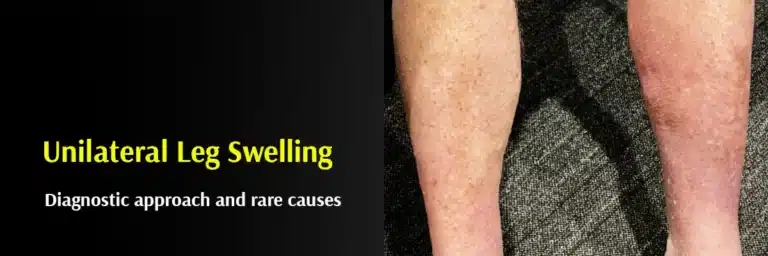
Two cases, post-thrombotic syndrome and traumatic lymphoedema, illustrating a systematic approach to acute and chronic swelling of one leg.

A case of secondary mitral regurgitation in heart failure showing why heart failure medicines and, in selected patients, CRT are usually the first step.