Skip to content
2026-ACC-AHA-Lipid-Guidelines

ACC/AHA 2026 Dyslipidemia Guidelines: Key Updates & Clinical Summary

March 20, 2026 | Dr Reza Moazzeni, Cardiologist |
Last Updated: March 20, 2026
ACC / AHA 2026 Clinical Practice Guideline

ACC/AHA 2026 Dyslipidemia Guidelines

A practical clinician summary of risk assessment, LDL-C targets, Lp(a), CAC, and modern lipid management


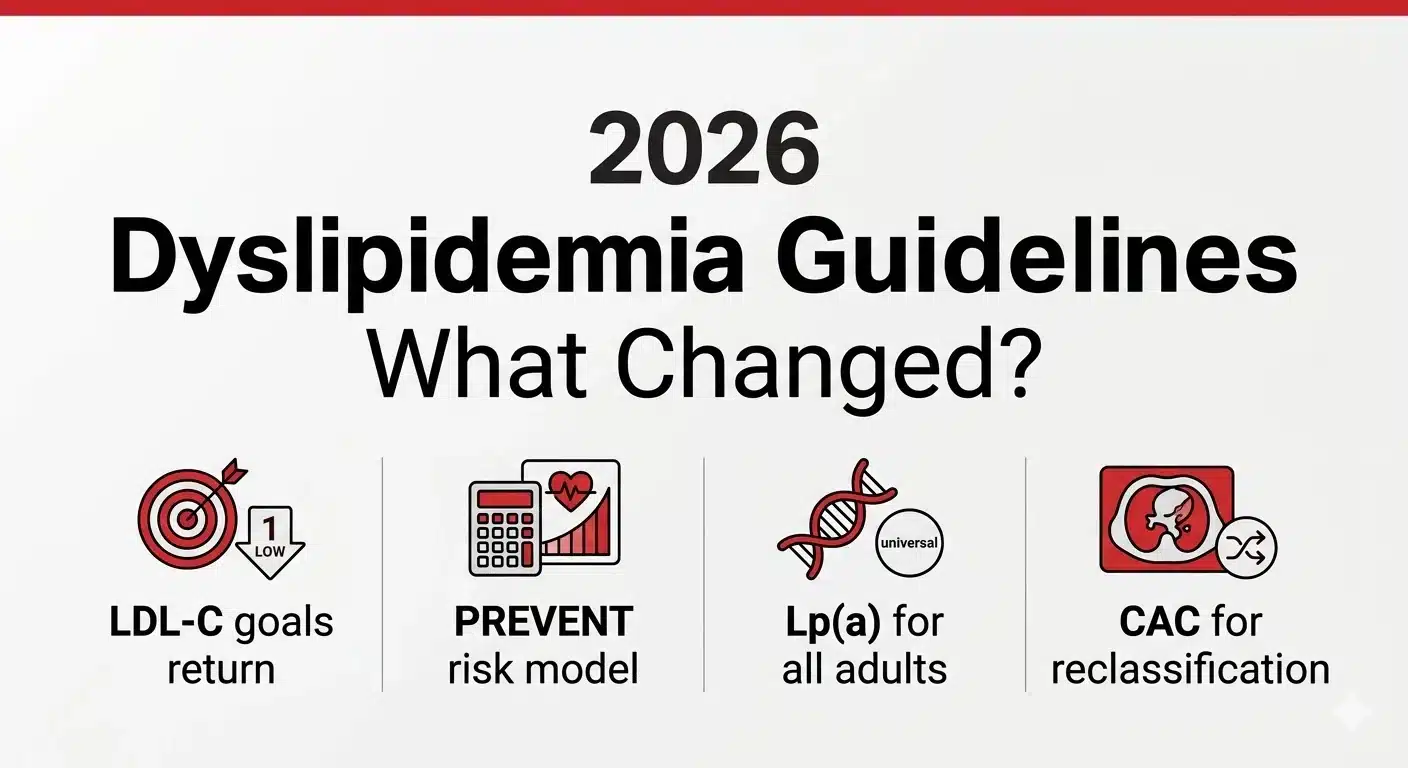
What changed in 2026:

  • LDL-C treatment goals return and guide therapy
  • PREVENT replaces traditional risk calculators
  • Lp(a) recommended at least once in all adults
  • CAC used to reclassify risk and guide decisions

In 30 Seconds — What Changed?

Risk Assessment

PREVENT replaces PCE and improves individualised risk estimation

Treatment Strategy

Earlier, lower, and longer LDL-C reduction

Targets

Clear LDL-C and non-HDL-C goals return, especially in high-risk patients

Biomarkers

Lp(a) measured once in all adults; ApoB used selectively

Imaging

CAC scoring can reclassify risk when the treatment decision is uncertain

Scope

Broader focus beyond LDL-C, including triglycerides and lifetime risk

Key Shift in 2026

From risk estimation → risk personalisation
From statins only → multi-pathway lipid management
From LDL focus → global dyslipidemia strategy

This guideline represents a shift from treating numbers to treating lifetime cardiovascular risk.

What Changed in 2026

Key practice updates from the 123-page guideline — what every clinician needs to know.

10 Top Take-Home Messages

1
Practice-Changing

Treat earlier. Lifestyle counselling from youth. Pharmacotherapy in youth with FH and young adults with LDL-C ≥160 mg/dL (4.1 mmol/L) or strong family Hx premature ASCVD.

2
New

PREVENT™ replaces PCE for 10- and 30-year risk. Use the CPR Model: Calculate → Personalise → Reclassify with CAC.

3
Revised

Borderline risk starts at 3%. LLT can be considered at PREVENT 3–<5% and should be considered at 5–<10%.

4
Practice-Changing

Treatment goals are back. LDL-C and non-HDL-C absolute targets now guide therapy alongside percentage LDL-C reduction.

5
New

ApoB for residual risk. Useful once LDL-C/non-HDL-C goals met, especially with elevated TG, diabetes, or achieved LDL-C <70.

6
New — COR 1

Lp(a) at least once in all adults. ≥125 nmol/L / 50 mg/dL (~1.4× risk). ≥250 nmol/L / 100 mg/dL (≥2× risk). If elevated, intensify LDL-C lowering and manage other modifiable risk factors.

7
Revised — COR 1

CAC for reclassification. Men ≥40, women ≥45. CAC >0 → initiate LLT. CAC ≥100 or ≥75th %ile → high-intensity. CAC 0 → may defer.

8
New — COR 1

LLT for diabetes, CKD 3-4, HIV regardless of LDL-C in adults 40-75. After 75, consider with shared decision-making.

9
Practice-Changing

Very-high-risk ASCVD: LDL-C <55 mg/dL (1.4 mmol/L), non-HDL-C <85 mg/dL (2.2 mmol/L). Ezetimibe no longer required before PCSK9 mAb. Bempedoic acid added.

10
Revised

Hypertriglyceridemia: Statin first-line for ASCVD risk. TG-lowering for pancreatitis prevention especially TG ≥1000.

Key Recommendation Changes (Table 1)

Click any row to expand the 2018 vs 2026 comparison.

2018 COR 2a: Direct LDL-C or modified estimate reasonable when LDL-C <70.
2026 COR 1: Martin/Hopkins or Sampson/NIH preferred over Friedewald in all adults and children.
2026 COR 2a: In adults on LLT with ASCVD, CKM, T2DM, and/or elevated TG — ApoB reasonable to guide intensification once LDL-C/non-HDL-C goals achieved.
2026 COR 1: Lp(a) at least once in all adults. ≥125 nmol/L = risk enhancer. ≥250 nmol/L = ≥2× risk. Fasting not required.
2026 COR 1: Adults 30–79 y: use PREVENT-ASCVD. Low <3%, Borderline 3–<5%, Intermediate 5–<10%, High ≥10%. Estimates 40–50% lower than PCE.
COR 1: CAC >0 → initiate LLT, particularly if ≥100 AU or ≥75th %ile.
COR 2a: CAC 0 + no high-risk conditions → defer LLT, repeat 3–7 y.
COR 1: Incidental CAC on non-cardiac CT (visual or AI) → trigger LLT.
COR 2a: Reproductive risk markers (menopause <45, preeclampsia, gestational DM/HTN, preterm delivery) personalise risk.
COR 3 (No Benefit): Dietary supplements not recommended for LDL-C or TG lowering.

Risk Assessment Framework

The CPR model replaces the old PCE-driven approach. Start with PREVENT, then personalise.

C

Calculate

Use PREVENT-ASCVD for 10-year risk in adults 30–79 y without ASCVD.

Low: <3%
Borderline: 3–<5%
Intermediate: 5–<10%
High: ≥10%
P

Personalise

Consider risk enhancers not captured by PREVENT.

Lp(a) ≥125 nmol/L
hsCRP ≥2 mg/L
Family Hx premature ASCVD
South Asian / Filipino ancestry
Reproductive risk markers
Chronic inflammatory disease
R

Reclassify

Use CAC scoring when LLT decision uncertain.

CAC 0: Defer, repeat 3–7 y
1–99: Moderate → LDL <100 (2.6)
≥100: High-intensity → LDL <70 (1.8)
≥300: ≥50% ↓ → LDL <70 (1.8)
≥1000: ≥50% ↓ → LDL <55 (1.4)

PREVENT vs PCE

PREVENT-ASCVD estimates are 40–50% lower than PCE for the same profile. The new borderline threshold (≥3%) identifies a similar number of adults eligible for LLT (~25 million US adults). Inputs: age, sex, BP, TC, HDL-C, DM, tobacco, eGFR, statin use, antihypertensive use. Optional: HbA1c, UACR, zip code.

Biomarkers & Testing

What to measure, when, and what each test adds.

Baseline Test

Standard Lipid Profile

TC, LDL-C, HDL-C, TG, non-HDL-C. Screen from age 19 y. Children 9–11 y.

LDL-C: Martin/Hopkins or Sampson/NIH preferred
Non-HDL-C: Report routinely (TC − HDL-C)
Fasting: Not required unless known hypertriglyceridemia
Add-On — COR 2a

ApoB

Atherogenic particle number. Superior when LDL-C and apoB discordant.

When: ASCVD, CKM, DM, TG >200, LDL <70
Very-high-risk goal: <55 mg/dL
Note: Unaffected by fasting
New — COR 1

Lp(a)

Genetically determined. Measure once. Minimally affected by lifestyle/LLT.

≥125 nmol/L (50 mg/dL): ~1.4× ASCVD risk
≥250 nmol/L (100 mg/dL): ≥2× risk
Action: If elevated → risk enhancer → intensify LDL-C lowering and other modifiable risk factors
Reclassification — COR 1

CAC Score

Men ≥40, women ≥45. Absolute score + percentile both prognostic.

CAC 0: Very low near-term risk
≥100 or ≥75th %ile: High-intensity LLT
Incidental CAC: Non-cardiac CT → trigger LLT

Treatment Goals by Risk Category

Based on Figure 1. Both absolute goals and percentage LDL-C reduction guide therapy.

Patient Category% LDL-C ↓LDL-C Goal
mg/dL (mmol/L)
Non-HDL-C Goal
mg/dL (mmol/L)
ApoB
ASCVD — Very High Risk≥50%<55 (1.4)<85 (2.2)<55
ASCVD — Not Very High Risk≥50%<70 (1.8)<100 (2.6)Consider
Severe Hypercholest. + HeFH / Risk / CAC≥50%<70 (1.8)<100 (2.6)
Severe Hypercholest. (no additional risk)Max tolerated<100 (2.6)<130 (3.4)
Diabetes + Multiple Risk Factors≥50%<70 (1.8)<100 (2.6)Consider
Diabetes (40–75 y, no ASCVD)≥30–49%<100 (2.6)<130 (3.4)
CAC ≥1000 AU≥50%<55 (1.4)<85 (2.2)
CAC 100–999 or ≥75th %ile≥50%<70 (1.8)<100 (2.6)
CAC 1–99 and <75th %ile≥30–49%<100 (2.6)<130 (3.4)
Primary Prev. — High (≥10%)≥50%<70 (1.8)<100 (2.6)
Primary Prev. — Intermediate (5–<10%)≥30–49%IndividualiseIndividualise
Primary Prev. — Borderline (3–<5%)≥30–49%IndividualiseIndividualise

All values in mg/dL with mmol/L in parentheses. Non-HDL-C ≈ LDL-C goal + 30 mg/dL (0.8 mmol/L).

High-Intensity (≥50% ↓)Moderate (30–49% ↓)Low (<30% ↓)
Atorvastatin 40–80 mg
Rosuvastatin 20–40 mg
Atorvastatin 10–20 mg
Rosuvastatin 5–10 mg
Simvastatin 20–40 mg
Pravastatin 40–80 mg
Lovastatin 40 mg
Fluvastatin XL 80 mg
Pitavastatin 1–4 mg
Simvastatin 10 mg
Pravastatin 10–20 mg
Lovastatin 20 mg
Fluvastatin 20–40 mg

Nonstatins + low/moderate statin can achieve ≥50% LDL-C ↓. East Asian ancestry may need lower starting doses.

Management Pathways

Select a patient profile for a concise decision pathway.

Primary Prevention — Adults 30–79 y, LDL-C 70–189 mg/dL (1.8–4.9 mmol/L)

1
Calculate 10-year risk with PREVENT-ASCVD.
2
Low (<3%): Lifestyle. If LDL-C 160–189 mg/dL (4.1–4.9 mmol/L) or 30-y risk ≥10%, consider moderate statin.
3
Borderline (3–<5%): Personalise with enhancers. Moderate statin → ≥30–49% ↓.
4
Intermediate (5–<10%): At least moderate statin (COR 1). Upper range → high-intensity ≥50% ↓.
5
High (≥10%): High-intensity statin. Goal: LDL-C <70 mg/dL (1.8 mmol/L), non-HDL-C <100 mg/dL (2.6 mmol/L). Add nonstatin if needed.
6
Uncertain? CAC for reclassification. CAC 0 → may defer. CAC >0 → initiate LLT.

Severe Hypercholesterolaemia — LDL-C ≥190 mg/dL (4.9 mmol/L)

1
Exclude secondary causes (hypothyroidism, nephrotic syndrome, ketogenic diet, medications).
2
Max tolerated statin for all patients (COR 1).
3
No FH / risk factors / CAC: Add ezetimibe, PCSK9 mAb, and/or bempedoic acid. Goal: LDL-C <100 mg/dL (2.6 mmol/L), non-HDL-C <130 mg/dL (3.4 mmol/L).
4
With HeFH / risk factors / CAC: Aggressive combination therapy. Goal: LDL-C <70 mg/dL (1.8 mmol/L), non-HDL-C <100 mg/dL (2.6 mmol/L).
5
With clinical ASCVD: Most aggressive combination. Goal: LDL-C <55 mg/dL (1.4 mmol/L), non-HDL-C <85 mg/dL (2.2 mmol/L). Consider ApoB <55 mg/dL.
6
Cascade screening + genetic testing for FH. FH Calculator →

Diabetes — Adults Without Established ASCVD

1
40–75 y: Moderate statin (COR 1) → ≥30–49% ↓. Goal: LDL-C <100 mg/dL (2.6 mmol/L), non-HDL-C <130 mg/dL (3.4 mmol/L).
2
Multiple risk factors: High-intensity statin → ≥50% ↓. Goal: LDL-C <70 mg/dL (1.8 mmol/L), non-HDL-C <100 mg/dL (2.6 mmol/L).
3
10-y risk ≥10%: Add ezetimibe or PCSK9 mAb to reach LDL-C <70 mg/dL (1.8 mmol/L), non-HDL-C <100 mg/dL (2.6 mmol/L).
4
TG 150–499 mg/dL (1.7–5.6 mmol/L) on statin: If LDL-C <100 mg/dL (2.6 mmol/L), consider adding icosapent ethyl (IPE).
5
>75 y: Moderate statin may be reasonable (life expectancy ≥2.5 y, shared decision-making).

Clinical ASCVD — Secondary Prevention

Very High Risk (majority of ASCVD)

≥2 major ASCVD events OR 1 major event + ≥2 high-risk conditions

First: High-intensity statin → ≥50% LDL-C ↓
Goal: LDL-C <55 mg/dL (1.4 mmol/L), non-HDL-C <85 mg/dL (2.2 mmol/L)
Add-on: Ezetimibe and/or PCSK9 mAb (no longer sequential — choose based on LDL-C lowering needed). Bempedoic acid also an option.
Inclisiran: Second-line PCSK9i if unable to tolerate/access mAb. CVOTs ongoing.

Not Very High Risk

Does not meet very-high-risk criteria above

First: High-intensity statin → ≥50% LDL-C ↓
Goal: LDL-C <70 mg/dL (1.8 mmol/L), non-HDL-C <100 mg/dL (2.6 mmol/L)
Consider: Treating to <55 mg/dL (1.4) / <85 mg/dL (2.2) especially in younger patients (COR 2a).
Evidence: 8-year safety data to median LDL-C 30 mg/dL (0.8 mmol/L). No signal for de-escalation at very low LDL-C levels.

Subclinical Coronary Atherosclerosis — CAC-Based Management

≥1000
High-intensity statin → ≥50% ↓. Goal: LDL-C <55 mg/dL (1.4 mmol/L), non-HDL-C <85 mg/dL (2.2 mmol/L) (COR 1). Treat like very-high-risk ASCVD.
300–999
High-intensity statin → ≥50% ↓. Goal: LDL-C <70 mg/dL (1.8 mmol/L), non-HDL-C <100 mg/dL (2.6 mmol/L) (COR 1). Consider intensifying to <55 / <85.
100–299
High-intensity statin → ≥50% ↓. Goal: LDL-C <70 mg/dL (1.8 mmol/L), non-HDL-C <100 mg/dL (2.6 mmol/L) (COR 1). Also applies if ≥75th percentile.
1–99
Moderate statin → ≥30–49% ↓. Goal: LDL-C <100 mg/dL (2.6 mmol/L), non-HDL-C <130 mg/dL (3.4 mmol/L) (COR 2a). Also for mild incidental CAC.
0
Low near-term risk. May defer LLT if no high-risk conditions present. Repeat CAC in 3–7 years.
New: Incidental CAC on non-cardiac CT (lung screening, chest CT) — visual estimate or AI algorithm — should trigger consideration of LLT.

Hypertriglyceridemia Management

Foundation: Statin remains first-line for ASCVD risk reduction. Statins lower TG by 10–30% dose-dependently.
Non-HDL-C and ApoB are better therapeutic targets for ASCVD risk mitigation than TG alone.
TG 150–499 mg/dL (1.7–5.6 mmol/L): Lifestyle + statin. If on statin with LDL-C <100 mg/dL (2.6 mmol/L) and fasting TG 150–499 mg/dL, consider adding icosapent ethyl (IPE).
TG ≥500 mg/dL (5.7 mmol/L): Focus on pancreatitis prevention. Prescription omega-3 and/or fenofibrate (do NOT combine gemfibrozil with statin). Refer to RDN.
TG ≥1000 mg/dL (11.3 mmol/L): Urgent TG-lowering for pancreatitis risk. Strict dietary fat limitation. Mandatory RDN referral (COR 1).
Note: Fibrates and niacin are not recommended for routine ASCVD event reduction when added to statin. DHA-containing omega-3 products can raise LDL-C (but not ApoB).

Lifestyle Foundation

AHA Life's Essential 8. Lifelong from youth. ~50% RRR even with genetic predisposition.

LDL-C Lowering Lifestyle

🥗 Mediterranean / DASH / vegetarian — fruits, veg, nuts, legumes, whole grains, fibre
🧈 Replace saturated/trans fats with mono/polyunsaturated
🏃 ≥150 min/week moderate-vigorous + resistance ≥2 days/week
⚖️ Healthy weight
🚭 Tobacco cessation
💊 Supplements NOT recommended (COR 3)

TG Lowering Lifestyle (by range)

TG 150–499 mg/dL (1.7–5.6 mmol/L): Low sugar/refined carbs/sat fat, minimise alcohol. Physical activity.
TG 500–999 mg/dL (5.7–11.3 mmol/L): + No alcohol, individualised fat limitation. Refer RDN (COR 2a).
TG ≥1000 mg/dL (11.3 mmol/L): + Mandatory RDN referral (COR 1). Strict fat restriction. Exclude FCS.
Triggers: Alcohol, sugar/refined carbs, uncontrolled DM, hypothyroidism, obesity, steroids, oestrogens, retinoids, antiretrovirals.

Special Populations

When standard pathways need tailoring. Click to expand.

Screen 9–11 y (COR 1). Cascade from ≥2 y if family Hx. ~20% adolescents have lipid abnormalities; 1 in 250 HeFH. Family Hx alone misses ~50%. Early pharmacotherapy for FH.
Statins, PCSK9 mAb, bempedoic acid, ezetimibe contraindicated. Colesevelam safest option. Reproductive risk markers are ASCVD risk enhancers.
COR 1: Moderate statin ± ezetimibe for CKD 3+ with LDL-C 70–189 mg/dL (1.8–4.9 mmol/L) (SHARP). With ASCVD: high-intensity statin → LDL-C <55 mg/dL (1.4 mmol/L), non-HDL-C <85 mg/dL (2.2 mmol/L). Dialysis: initiating statin not beneficial; continuing may be reasonable. Atorvastatin preferred. Rosuvastatin ≤10 mg in severe CKD.
COR 1: Pitavastatin 4 mg 40–75 y on stable ART (REPRIEVE: 35% MACE ↓). Not CYP3A4. Lovastatin/simvastatin contraindicated with PIs.
Elevated Lp(a) is a risk enhancer — not a direct treatment target with current therapies. If elevated: intensify LDL-C lowering, manage all other modifiable risk factors aggressively. Novel Lp(a)-lowering therapies (pelacarsen, olpasiran, lepodisiran) are in phase 3 trials but not yet available. Lp(a) overview →
Primary prev: LLT may be considered (life expectancy ≥2.5 y). Continue existing statin — discontinuation ↑ HF hospitalisation/CV events.
~10% intolerant. Try alternative statin, reduce dose. Bempedoic acid (COR 1), ezetimibe, PCSK9 mAb. CoQ10 NOT recommended (COR 3). Routine CK NOT useful (COR 3). Routine LFTs no longer required.
Cancer: Continue LLT. Statins may protect against anthracycline cardiotoxicity. CID: Standard calculators underestimate risk. CID is a risk enhancer. Monitor lipids on anti-inflammatory therapy.

Monitoring & Follow-Up

Assess response, adherence, and safety at defined intervals.

Baseline

Fasting or nonfasting lipid profile. Assess ASCVD risk. Initiate lifestyle ± pharmacotherapy. Measure Lp(a) once.

4–12 Weeks Post-Initiation

COR 1: Repeat lipid profile. Assess % LDL-C ↓ and absolute goals. Evaluate adherence. Nonfasting adequate unless hypertriglyceridemia. Inadequate → intensify.

Every 6–12 Months

Individualise frequency. Stable patients → annual testing. Monitoring improves adherence and reduces therapeutic inertia.

Ongoing Safety

• Routine CK: NOT useful (COR 3)
• Routine LFTs: NOT required (FDA 2012)
• CoQ10: NOT recommended (COR 3)
• DDI screening: COR 1 — especially CYP3A4 statins
• Statin → T2DM risk: Do NOT discontinue

InteractionStatinsAction
Protease inhibitors (ritonavir, cobicistat)Lovastatin, simvastatinContraindicated
Protease inhibitorsAtorvastatinMax 20 mg/day
Azole antifungals (itraconazole, ketoconazole)Lovastatin, simvastatinContraindicated
CyclosporineLovastatin, simvastatin, pitavastatinContraindicated
Amiodarone, dronedaroneSimvastatinMax 20 mg/day
Verapamil, diltiazemLovastatin, simvastatinMax 20 mg/day
TicagrelorSimvastatinMax 40 mg/day
GemfibrozilAll statinsAvoid; use fenofibrate

Pravastatin avoids CYP450. Pitavastatin (PLHIV preferred) avoids CYP3A4. Rosuvastatin/fluvastatin use CYP2C9.

Evidence & Methodology

How this guideline was built and how to interpret its recommendations.

Class of Recommendation

COR 1 Benefit ≫ Risk — IS recommended
COR 2a Benefit ≫ Risk — IS reasonable
COR 2b Benefit ≥ Risk — MAY be reasonable
COR 3 No Benefit / Harm

Level of Evidence

A High quality — multiple RCTs
B-R Moderate — 1+ RCT
B-NR Nonrandomised studies
C-LD Limited data
C-EO Expert opinion

Literature search: Oct–Dec 2024. Key CVOTs: FOURIER, ODYSSEY OUTCOMES, CLEAR OUTCOMES, REDUCE-IT, REPRIEVE.

Chair: Roger S. Blumenthal, MD. Vice Chair: Pamela B. Morris, MD.

Read Full Guideline (Circulation 2026) ↗

Frequently Asked Questions

Common questions about the 2026 dyslipidemia guideline.

The AHA PREVENT-ASCVD equations are a more contemporary risk estimation tool that replaces the older Pooled Cohort Equations (PCE) for 10-year and 30-year cardiovascular risk in adults aged 30 to 79 years. PREVENT produces estimates that are 40–50% lower than PCE for the same risk factor profile, but the new lower treatment thresholds (borderline risk starts at ≥3%) identify a similar number of adults who may benefit from lipid-lowering therapy. PREVENT includes additional inputs like eGFR and statin use, with optional enhancements for HbA1c, albumin-to-creatinine ratio, and social deprivation index. Try our PREVENT Calculator →
LDL-C targets depend on your cardiovascular risk category. For patients with established ASCVD at very high risk, the goal is LDL-C <55 mg/dL (1.4 mmol/L) and non-HDL-C <85 mg/dL (2.2 mmol/L). For those with ASCVD not at very high risk, the goal is LDL-C <70 mg/dL (1.8 mmol/L). For primary prevention with diabetes or multiple risk factors, the goal may be <70 mg/dL or <100 mg/dL (2.6 mmol/L) depending on risk level. In all cases, a percentage LDL-C reduction of ≥30–50% is also a treatment objective. See our Lipid Targets Tool →
Yes — the 2026 guideline gives a Class 1 recommendation for Lp(a) measurement at least once in all adults. Lp(a) is largely genetically determined and is not meaningfully lowered by lifestyle changes or standard lipid-lowering therapy. If elevated (≥125 nmol/L or 50 mg/dL), it serves as a risk-enhancing factor that should prompt more aggressive LDL-C lowering and management of other modifiable risk factors. It is not a direct treatment target with currently available therapies, though novel Lp(a)-lowering agents are in late-stage clinical trials. Read our Lp(a) overview →
CAC scoring is recommended (COR 1) in adults at intermediate risk (5–<10%) and select adults at borderline risk (3–<5%) when the decision about lipid-lowering therapy remains uncertain after a clinician–patient discussion. It is not recommended universally — it is a selective reclassification tool. A CAC score of 0 with no other high-risk conditions may allow deferral of therapy with repeat testing in 3–7 years. A CAC score >0, particularly ≥100 AU or ≥75th standardised percentile, should prompt initiation of therapy. Learn about calcium scoring →
ApoB measurement is not recommended universally but has been elevated in importance (COR 2a). It is most useful in adults already on lipid-lowering therapy, particularly those with ASCVD, CKM syndrome, type 2 diabetes, or elevated triglycerides, where LDL-C may underestimate the true atherogenic particle burden. ApoB helps identify residual risk after LDL-C and non-HDL-C goals have been achieved and can guide decisions about further therapeutic intensification. It is unaffected by fasting status and is especially valuable when LDL-C and ApoB are discordant. Try our ApoB Calculator →
No. The 2026 guideline gives a Class 3 (No Benefit) recommendation for dietary supplements for LDL-C or triglyceride lowering, citing limited and inconsistent data. This includes fish oil supplements, red yeast rice, and plant sterols as routine ASCVD risk reduction strategies. Evidence-based pharmacotherapy (statins, ezetimibe, PCSK9 monoclonal antibodies, bempedoic acid) remains the standard of care when lifestyle modification alone is insufficient.
A lipid profile should be repeated 4 to 12 weeks after starting or adjusting lipid-lowering therapy and every 6 to 12 months thereafter (COR 1). Nonfasting testing is adequate in most cases unless hypertriglyceridemia is known. Regular monitoring helps assess both the percentage LDL-C reduction and achievement of absolute treatment goals, improves medication adherence, and reduces therapeutic inertia — the failure to intensify therapy when goals are not met.

Personalised Cardiovascular Risk Assessment

If you would like a comprehensive cardiovascular risk assessment — including Lp(a), ApoB, coronary calcium scoring, and individualised lipid management — book an appointment with Dr Reza Moazzeni at Heartcare Sydney.

Book an Appointment →

Clinical Disclaimer: This page summarises the 2026 ACC/AHA Dyslipidemia Guideline for educational purposes. It does not replace clinical judgement. Treatment decisions must be individualised.

Blumenthal RS et al. Circulation. 2026;153:e00–e00. DOI: 10.1161/CIR.0000000000001423

Updated: March 2026

Dr Reza Moazzeni, Cardiologist
Reviewed by
Dr Reza Moazzeni MD FRACP
Consultant Cardiologist · Heartcare Sydney

Dr Moazzeni is a consultant cardiologist practising in Westmead, Sydney with expertise in preventive cardiology, echocardiography, and cardiovascular risk assessment. He is a Fellow of the Royal Australasian College of Physicians.

0 0 votes
Article Rating
Subscribe
Notify of

0 Comments
Newest
Oldest Most Voted
Inline Feedbacks
View all comments
0
Would love your thoughts, please comment.x
()
x